Sustainability

Lemnos Sustainability 12
essent – An essential design that considers sustainability from multiple perspectives
A wall clock designed to be easy to read for all ages and to become a new standard by naturally blending into any space
essent: born from two inspirations
essent originated from two distinct sources of inspiration.
One of these originates from the personal parenting experiences and memories of its designer, Daisuke Kitagawa. He explains that when his child began learning to read clocks, there were no wall clocks on the market that clearly conveyed the differences between hours (base-12) and minutes/seconds (base-60), or between the hour, minute, and second hands, while fitting naturally into interior spaces. This led him to envision a wall clock that would be easy for children to read but would fit naturally into any space, not just for children.
The second starting point lies in materials and manufacturing methods. Most wall clock faces are produced by offset or silkscreen printing onto board or sheet materials. He sought to discover materials and techniques that could offer a new-yet-timeless form of expression for the dial, a defining feature of any wall clock. At the intersection of these two ideas, essent was born.
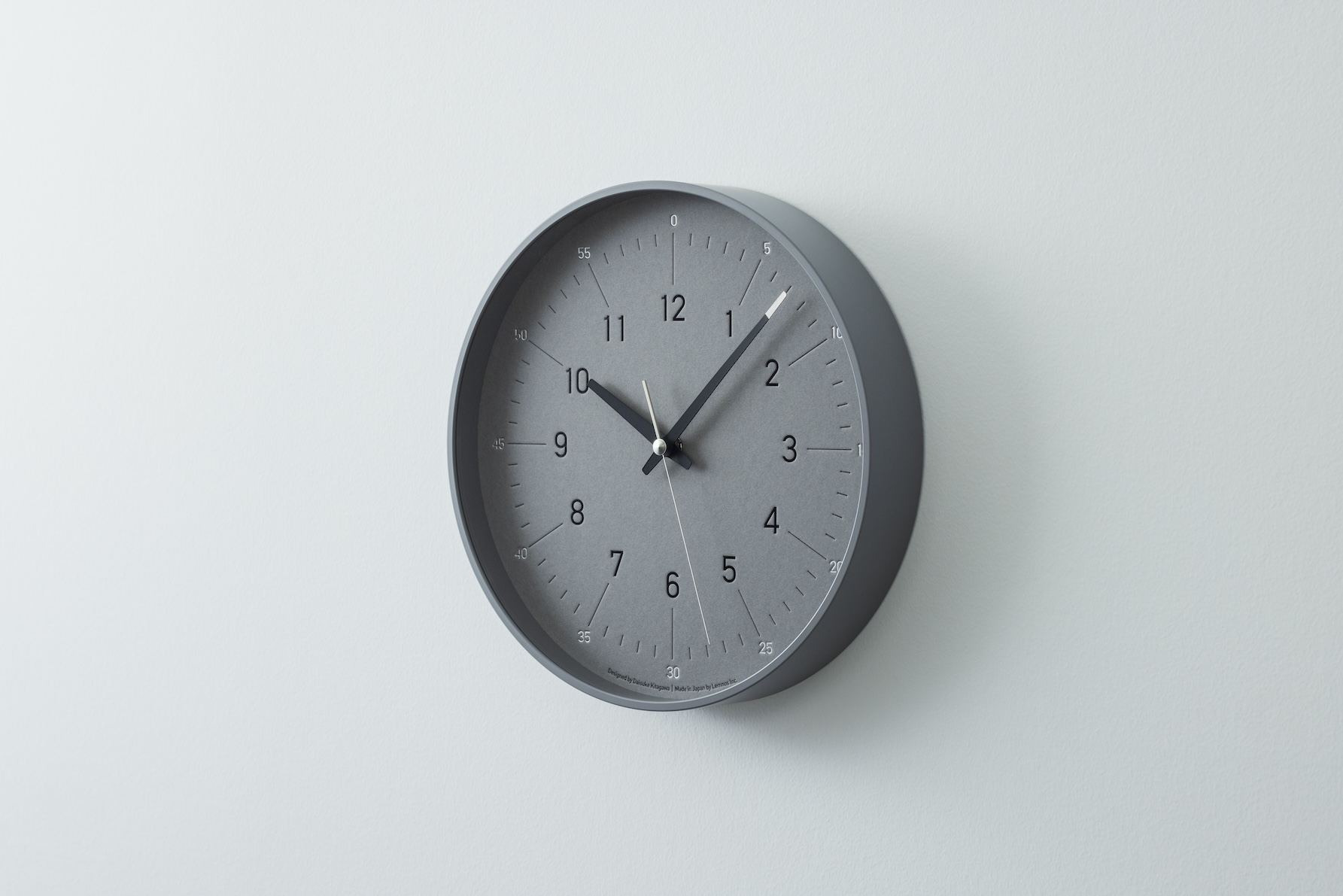 Designed by Daisuke Kitagawa, Photography by Isao Hashinoki
Focused on design, function, and materials, with long-lasting use as the key to sustainability
In developing this clock, Kitagawa set three clear goals. These were: (1) to be easy for children to read, (2) to blend harmoniously into any space, and (3) to become a product designed for long-term use.
As part of the first objective, not only the hours (base-12) but also the minutes and seconds (base-60) are precisely designed and displayed together. Secondly, each of the hour, minute, and second hands is given a distinct character, which makes the differences easy to explain verbally and easy for children to recognize. In addition, colors corresponding to the base-12 and base-60 systems are applied to both the dial and hands, thereby enhancing visibility.
For the second objective, the design avoids stereotypical “childlike” elements and is intended to suit all types of spaces. The dial features a newly designed, highly legible original font that combines serif and sans-serif styles for a timeless-yet-distinctive look. The hands are inspired by dauphine-style design, resulting in a clean and pleasing aesthetic.
To fulfill the third objective, essent incorporates cross-generational functionality and design, with materials selected for environmental sustainability and long-term durability, and it comes with a lifetime warranty. Although easy-to-read clocks for children have existed on the market, he notes that most feature overtly childlike designs, which limit the spaces in which they can be used and the length of time for which they remain suitable. In contrast, essent can be used broadly and for years to come through its clean, versatile design, with no restrictions on users, spaces, or design lifespan.
To further extend its lifespan, materials and manufacturing methods are carefully selected to reduce environmental impact, and a UV-cut coating is applied to the glass to prevent deterioration, even when exposed to direct sunlight. Furthermore, essent is designed for easy disassembly, and Lemnos provides a lifetime warranty.
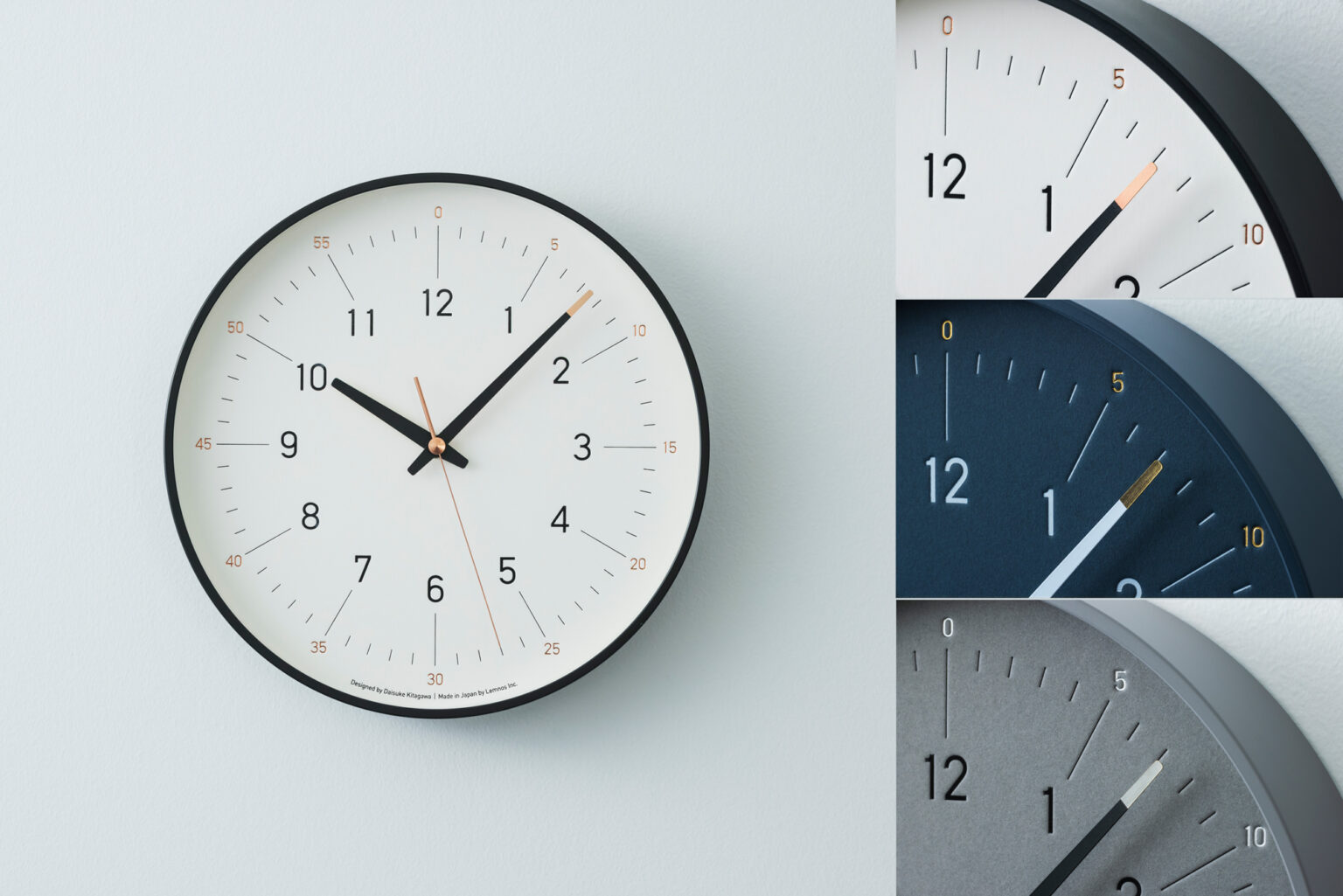
Going beyond material considerations to contribute to the sustainability of technology and industry
Each thin, delicate clock frame that harmonizes with essent’s expressive face is carefully crafted one by one using aluminum casting, a traditional technique of Takaoka City, Toyama Prefecture. Production is carried out by Takata Factory, a group company of Takata Lemnos. All scrap generated during the casting process is remelted and reused, resulting in almost no waste and an extremely low environmental impact.
The printing on each face, using only FSC®-certified paper, is also meticulously finished one by one by highly skilled foil-stamping artisans. While foil-stamping has traditionally been used mainly for short-lived printed materials, essent is designed for continuous production over many years, even decades. This signifies a contribution to material considerations and the long-term sustainability of techniques and the industry overall.
All components of essent can be easily disassembled, and with Lemnos’s lifetime warranty, the clock is built to be enjoyed indefinitely.

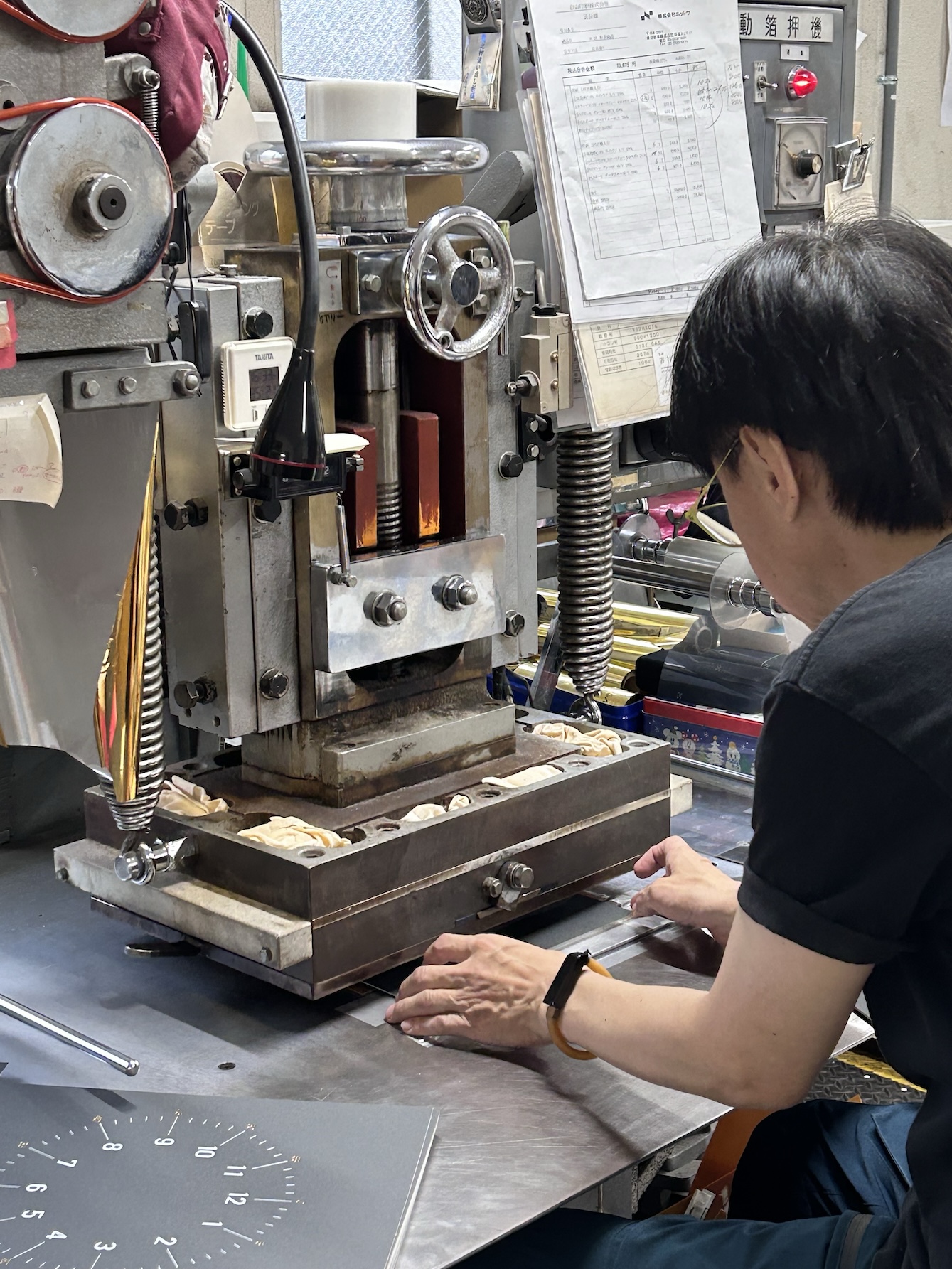
Left:TAKATAFACTORY Right:Wako Co., Ltd.
Designed by Daisuke Kitagawa, essent aims to become a new standard by seamlessly blending into any space, while remaining easy to read for users of all ages. By carefully selecting materials and using manufacturing methods that enhance their inherent qualities, essent achieves a richness of expression unlike anything seen before. Intended for wide and long-term use, its design also demonstrates the potential for new approaches to sustainable manufacturing.
 essent received the Good Design Award 2025 and the iF Design Award 2025. From left: DFI24-06 WH, GY, NV.