Story
Story Vol.26
CUCU: The First Cuckoo Clock Developed by Lemnos
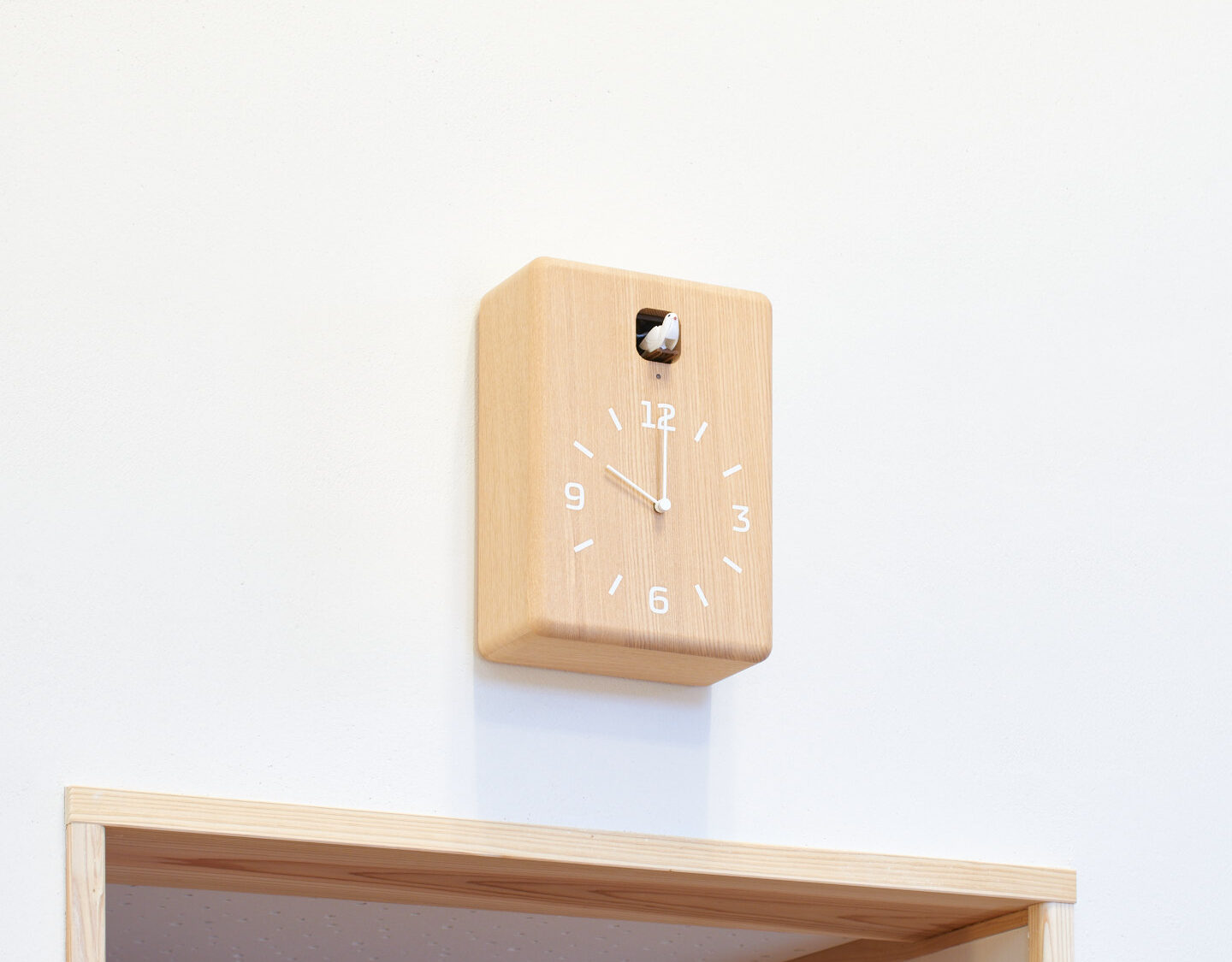
CUCU was the first cuckoo clock developed by Lemnos. It has been produced continuously for over 15 years since its release and remains one of the brand’s standard models today. We spoke with designer Yuichi Nara, who still carefully uses the original prototype from the development stage, about his thoughts on this clock.
[Text: Yuichi Nara]
Why I Still Use the Very First One
CUCU was the first cuckoo clock project undertaken by Lemnos. The CUCU I use personally is not a mass-produced item, but the very first prototype, made at the time by Mr. Hanano, a wooden pattern craftsman in Takaoka, who specializes in casting molds.
I have been using that one at home since before it was released over 15 years ago, and before I knew it, the years had passed. Over the years, it has needed just two repairs: once to the movement, and once to address a slight deformation in the wooden parts. Aside from that, it has continued to tell time, unchanged, without any special care.
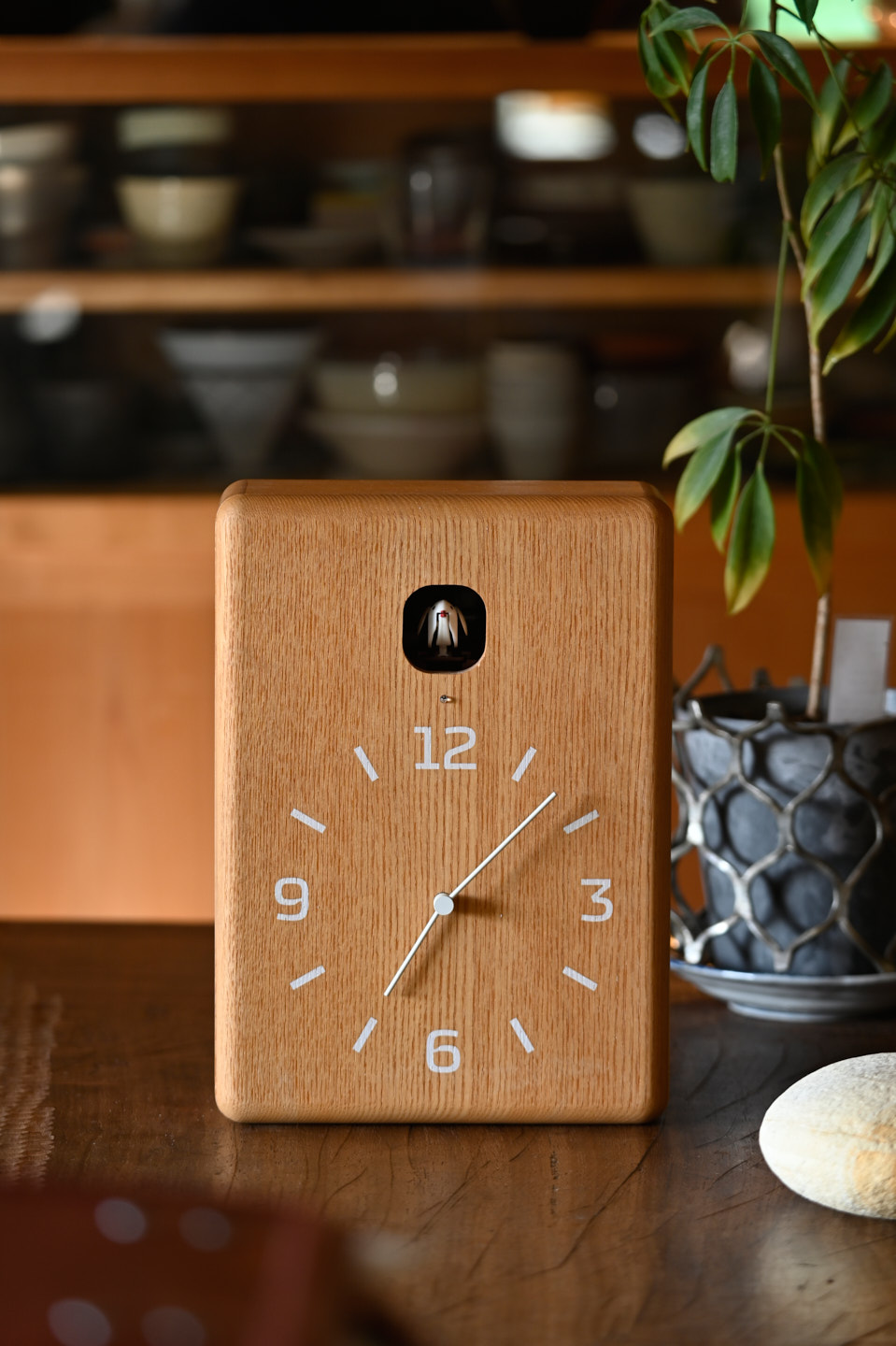 The first prototype
The designer himself has continued to use the same clock, even while moving from place to place and repairing it as needed. In hindsight, this may be the most concise expression of the CUCU clock’s true character.
A Design That Is Not Over-Defined
When designing CUCU, my guiding principle was to “not over-define” its form. While retaining the elements of a traditional cuckoo clock, I aimed for a restrained silhouette that would not feel out of place in Japanese living spaces. Rather than letting the form speak too loudly, I placed importance on leaving a sense of openness in the space.
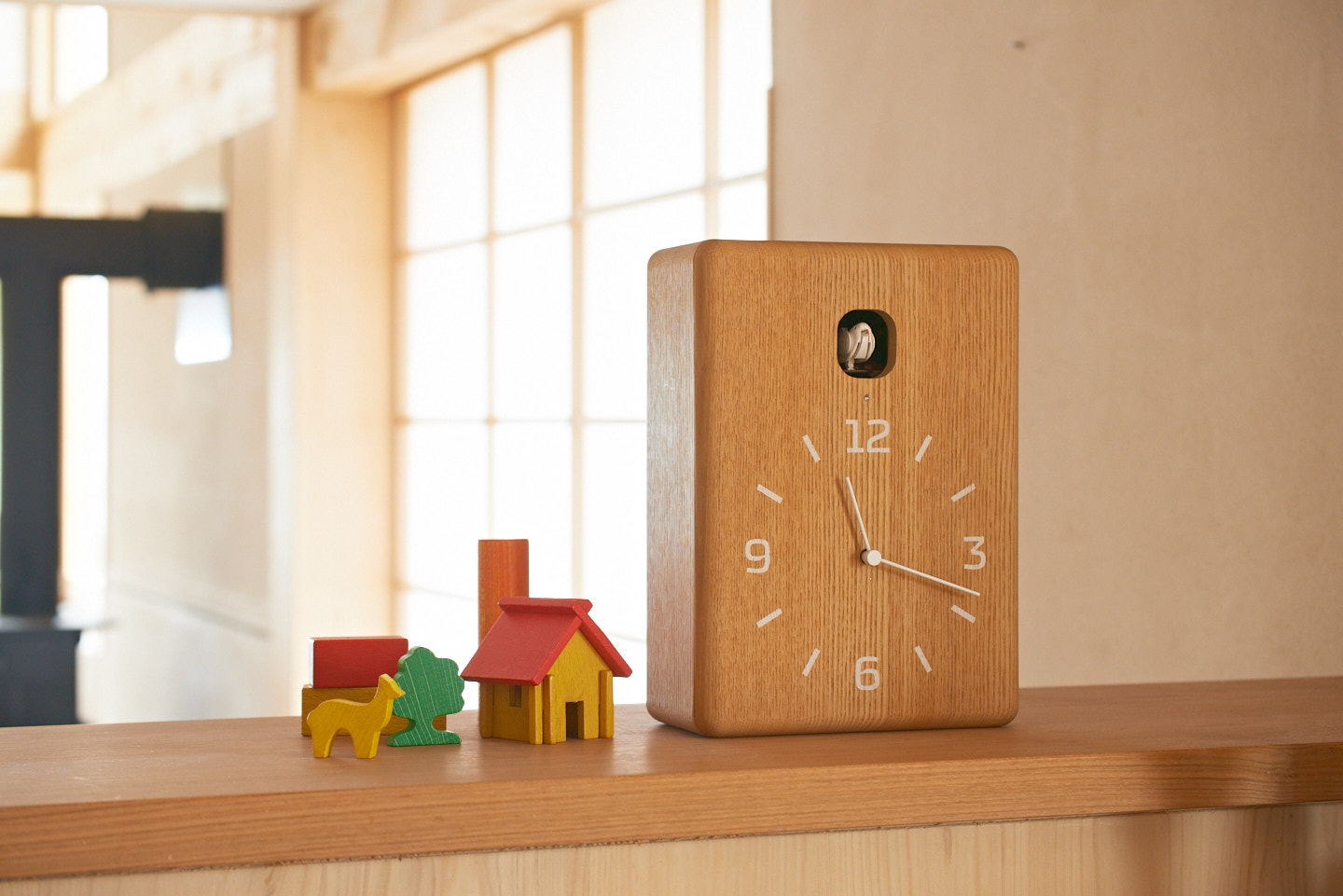 Born as a prototype and then brought into everyday life
In the early stages of development, ash wood was used as the material. It is an appealing choice, with a fine grain and a subtly warm tone. However, from the outset, repairability and adjustability were considered to be just as important as mass production and efficiency.
The prototype I use has also been adjusted once due to the natural movement of the wood. I did not see this as the clock “breaking,” but rather as something entirely natural for a tool made of wood.
Solid wood responds to changes in humidity and environment. That is precisely why I believe a repairable structure is so important. It should be an object that you can live with over time, rather than something disposable. This belief is also why I kept the form as simple as possible.
Later, as the originally used ash wood became difficult to source consistently, we reconsidered the material and switched to Japanese chestnut wood. While not flashy, it has a clear grain and calm tone that grows richer with use. It harmonizes well with the wood and plaster materials commonly found in Japanese living spaces, which gives CUCU an even more natural presence.
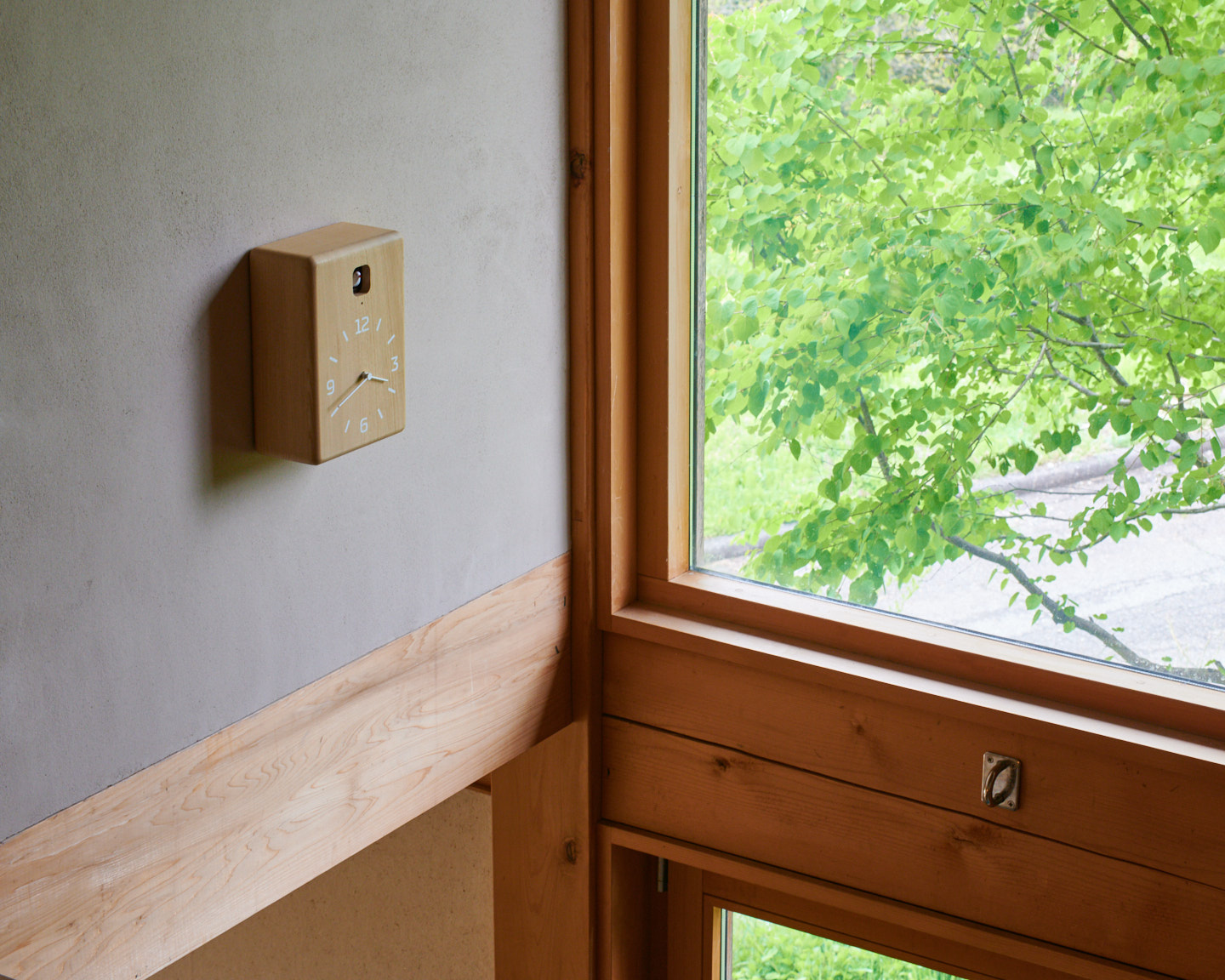 CUCU in Japanese chestnut wood
A Clock Designed for Years of Use
CUCU is designed to be either hung on a wall or placed on a surface. Rather than being a clock that is fixed permanently to a wall, it was conceived as a tool that can change its place as the home itself evolves.
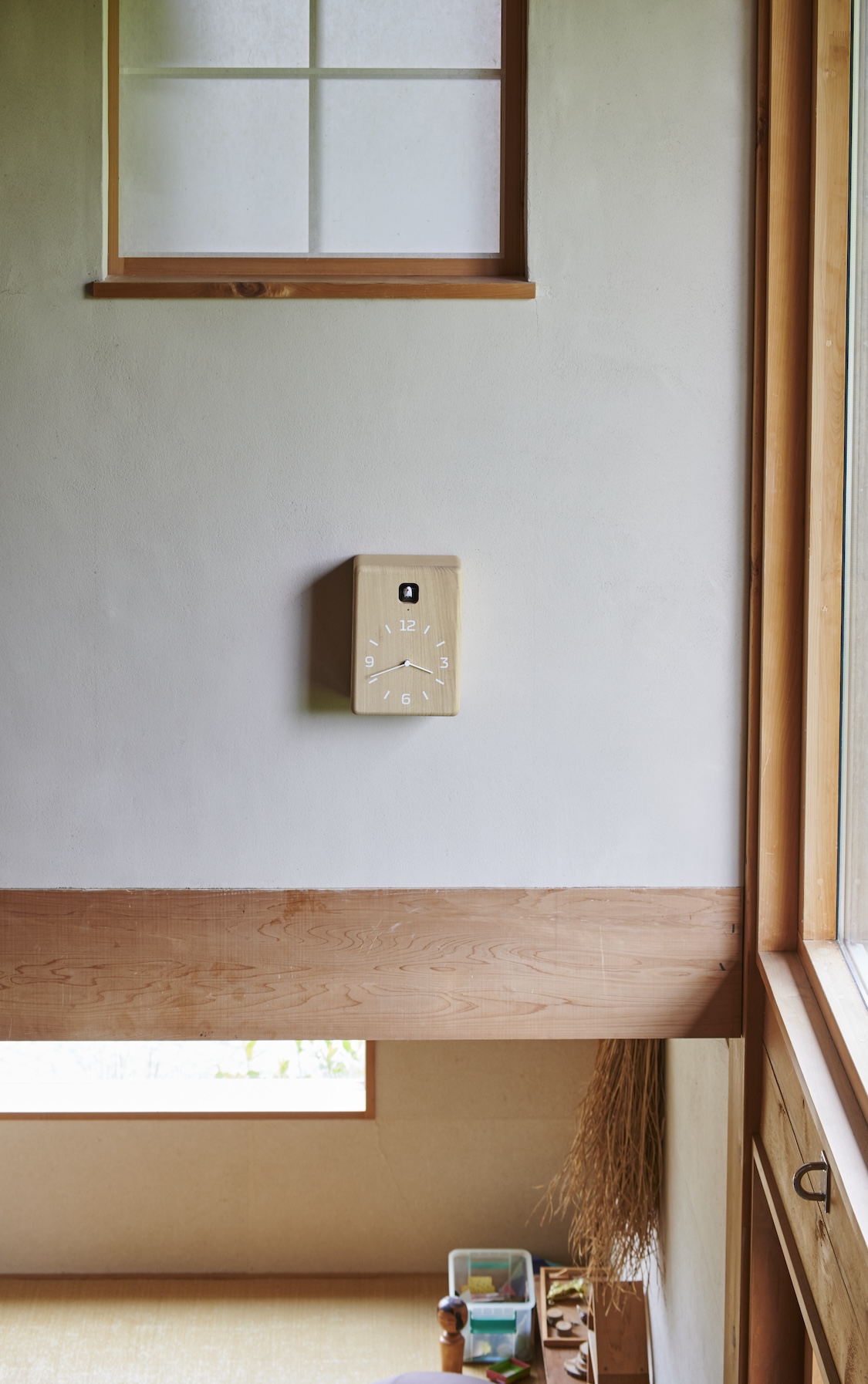
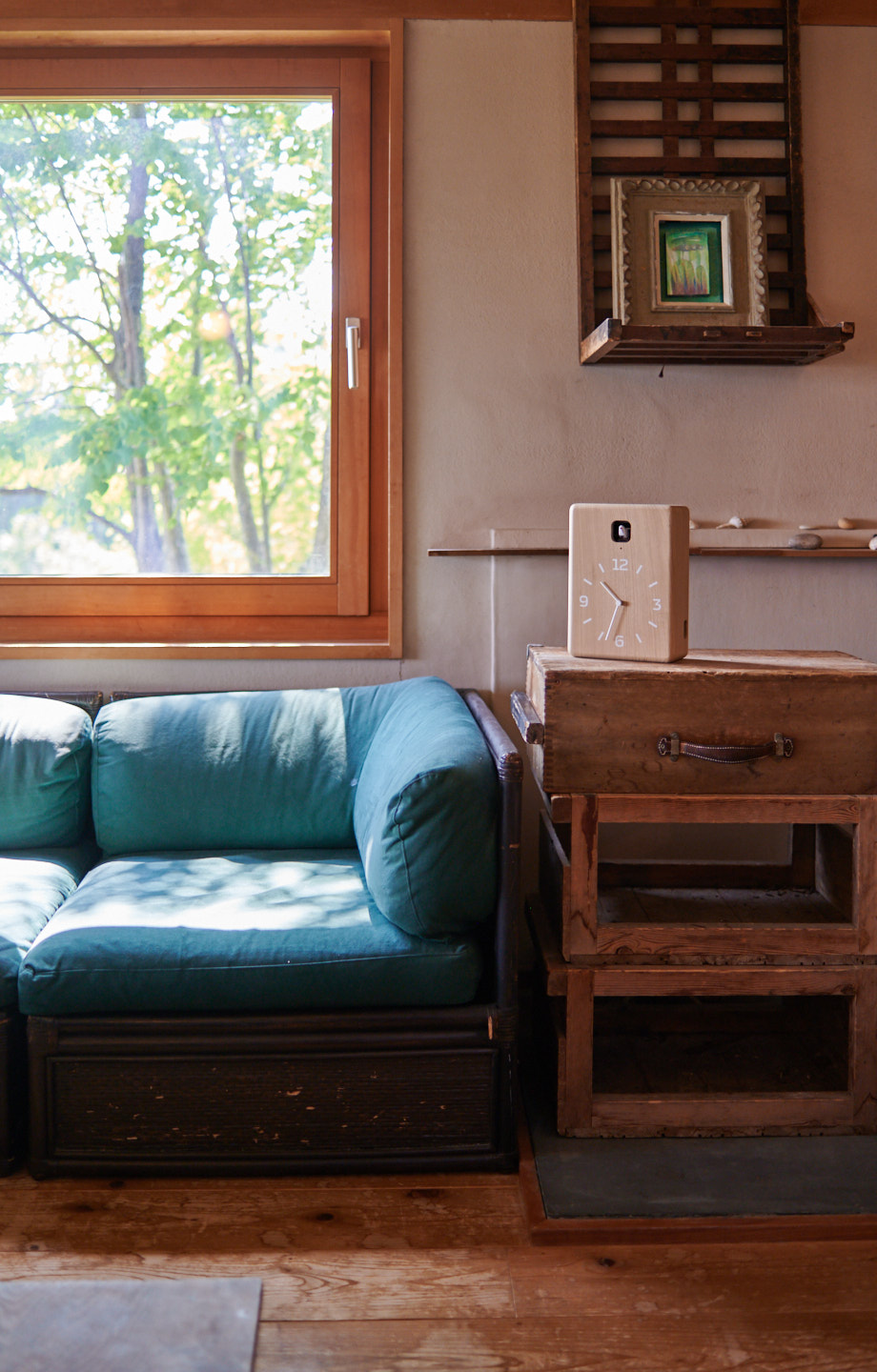
CUCU also includes features that are necessary for modern living, such as a light sensor and volume control. However, these were intentionally kept in the background. This is because the focus was not on functionality itself but on the simple act of chiming in everyday life.
Interestingly, even after chiming in my home for over 15 years, I have never once found it distracting. Instead, I feel it has become a presence that gives a steady rhythm to daily life.
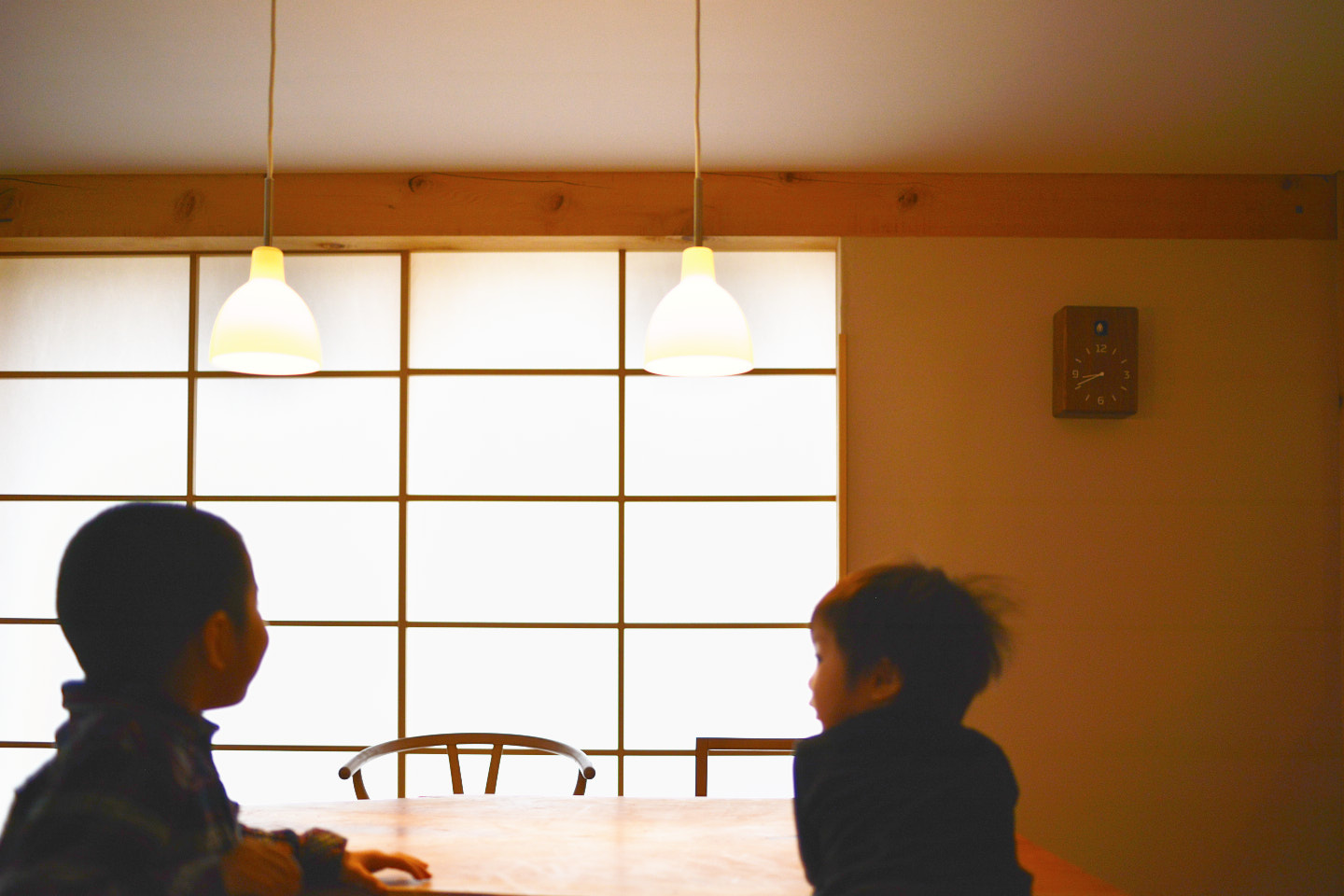 The rhythm of daily life, brought by a cuckoo clock
Another important aspect is that it can be repaired. Both the clock movement and the wooden parts can be serviced whenever necessary. The fact that I have personally continued to use it while repairing it over time serves as proof of this. This mindset of creating products that last and can be cared for reflects Lemnos’s approach to craftsmanship.
CUCU is not a special clock.
It is a cuckoo clock that can be repaired, can be moved to suit changing living spaces, stays close to everyday life, and grows in value over time.
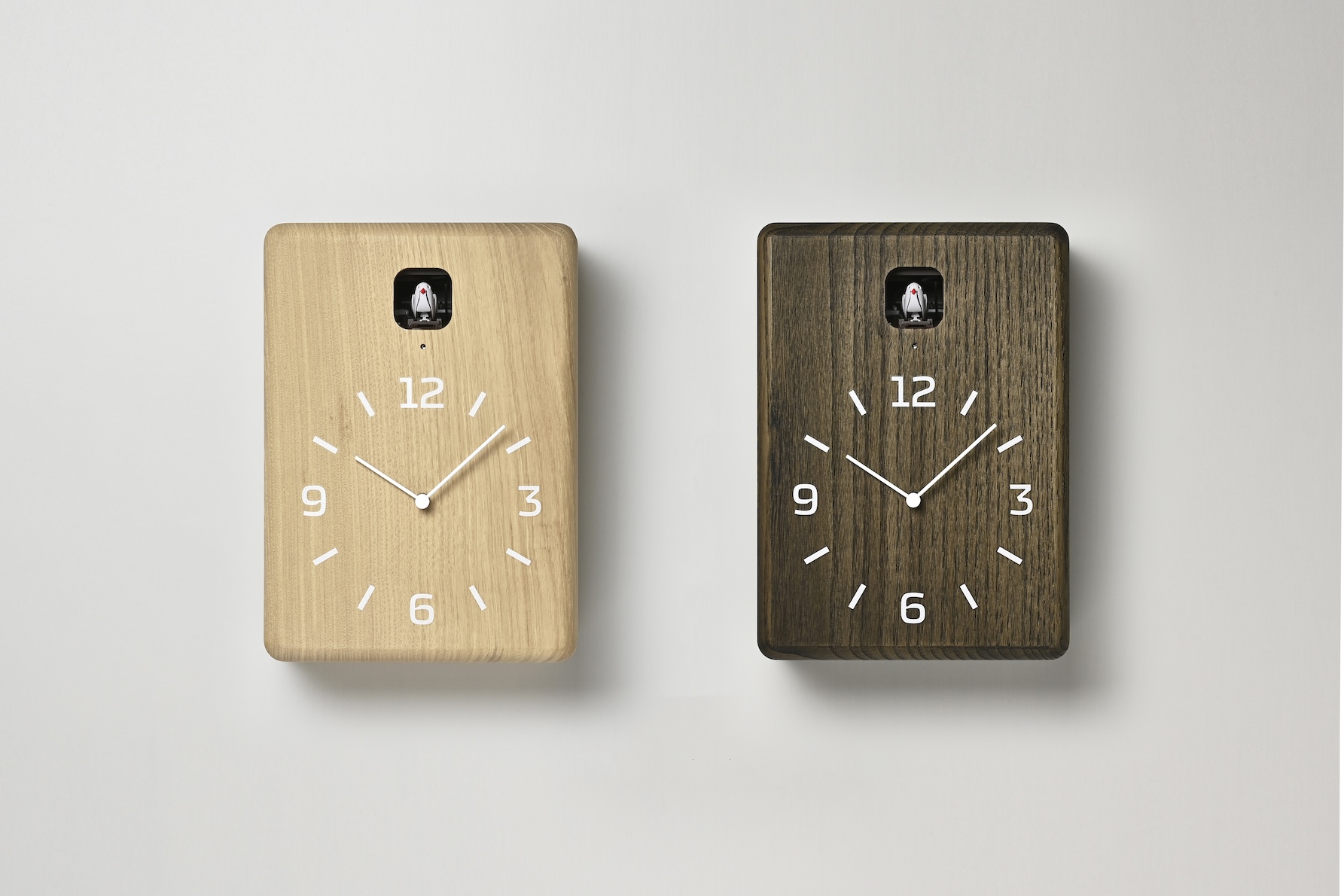 CUCU(NY25-08 NT,CHA)
To product page

Yuichi Nara
Born in Tokyo, 1977. In 1999, he graduated from the Construction Department Architecture Course at Yokohama National University. Moved to Italy in 2000. Began designing following a period working at a glass studio and an architect’s office in Venice. In 2006, graduated from Venezia Construction University. During a trip to Noto, Japan, he was so impressed with the richness of the nature and lifestyle, he decided to return to Japan and moved to Notojima. In 2007, he established the Noto design office. Studying local materials and learning local techniques and applying them to his work, he attempts to design products that enrich everyday life. Alongside his design activities, he also grows rice in a rented untilled paddy field.
http://www.notodesign.jp/