Story

Story Vol.18
Noto’s Earth: Diatomaceous Earth
Yuichi Nara, who engages in his creative work on Noto Island, came across a local material: diatomaceous earth.
Nara is dedicated to exploring regional materials and traditional techniques, and he seeks to create designs that enrich everyday life. In this article, he shares his reflections on this distinctive material and his approach to clockmaking.
[ Text: Yuichi Nara ]

View of Notojima from the Notojima Bridge
In 2007, I moved to Notojima, an island nestled in the middle of Nanao Bay on the Noto Peninsula. It’s not a remote island; two large bridges link it to the mainland, and the traffic across them is so routine that the opposite shore hardly feels like the “mainland.”
When crossing 「the Notojima Bridge」—one of the island’s two connections to the mainland—the arched roadway climbs to a peak that reveals the island in its entirety. I still remember my first visit, as I was overcome with awe at the breathtaking panorama before me.
I’ve crossed this bridge countless times, and I am always struck by the sweeping view: the deep blue sea on either side, the lush green island trees, and the pale, rocky cliffs that jut sharply from the water in scattered places. It wasn’t until sometime after moving here that I realized these pale, rocky cliffs were made of diatomaceous earth.
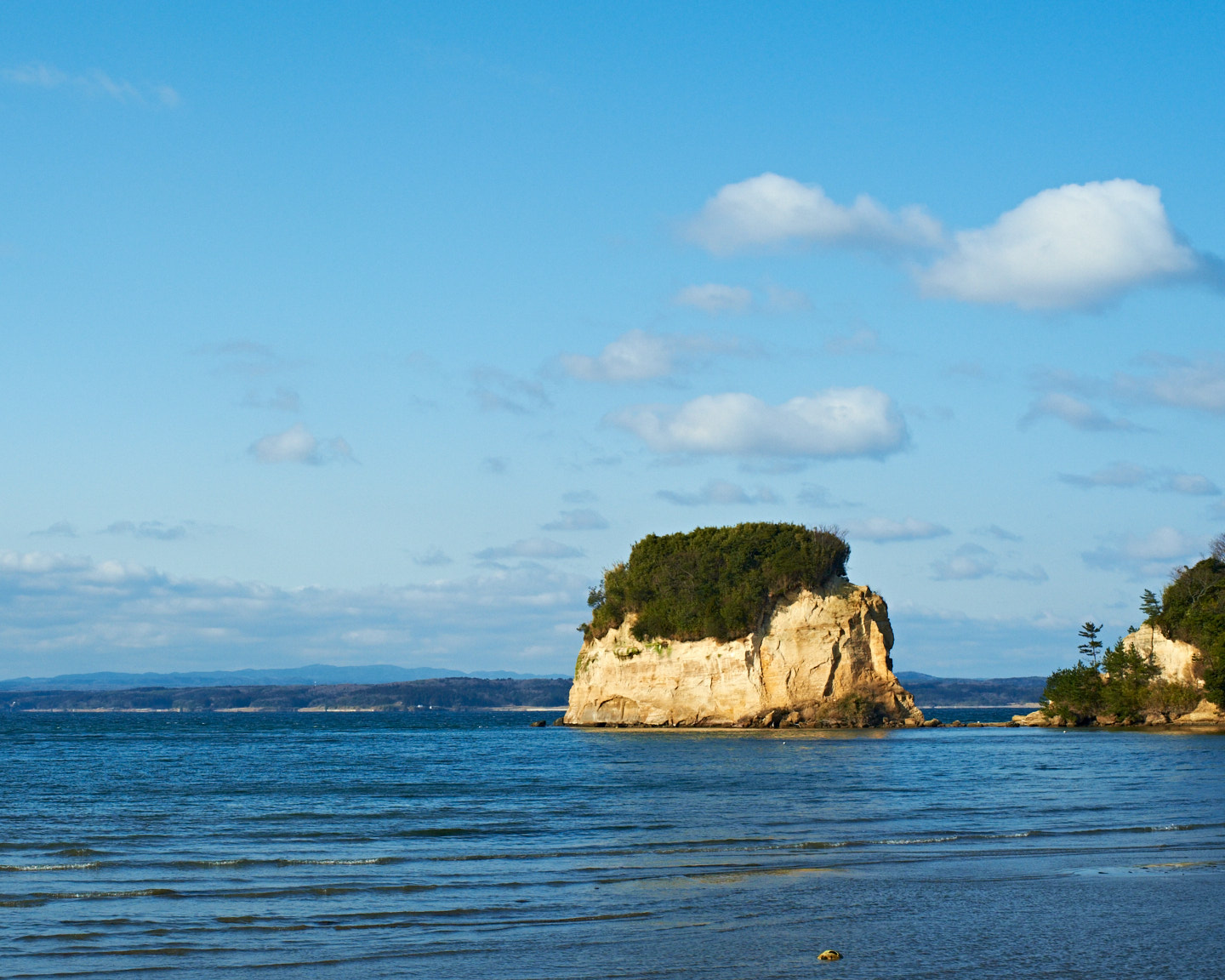
Cliffs on Notojima revealing layers of diatomaceous earth
As a designer and architect, I began exploring the materials and techniques used in Noto when planning the construction of my own home. That’s when I first learned about diatomaceous earth, a clay traditionally used for finishing plaster walls.
I also discovered that layers of diatomaceous earth stretch across Notojima and the entire Noto Peninsula. This unique soil is made from the fossilized remains of diatoms, a kind of plant-like plankton that settled on the seafloor. Thanks to its porous structure, it naturally regulates humidity and provides excellent insulation. In Noto, diatomaceous earth has long been put to a wide range of uses: for shichirin charcoal cooking stoves and grills, as a base layer for Wajima lacquerware, and even as molds for metal casting. Over time, I came to see how deeply it is intertwined with the region’s daily life and culture.
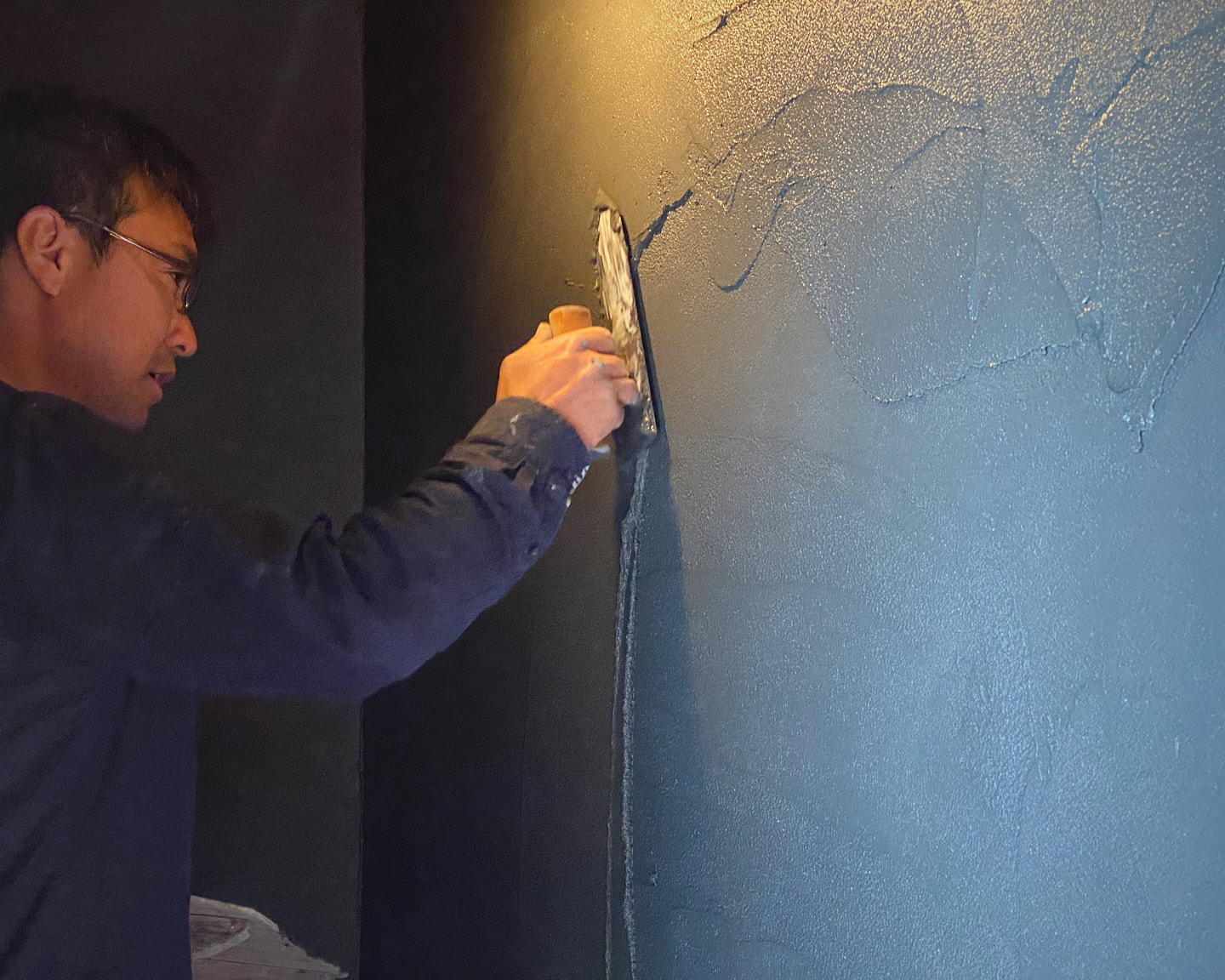
Plasterer applying diatomaceous clay to a wall
Diatomaceous earth is composed of countless tiny pores formed from the silica shells of diatoms, and it retains this structure even after fossilizing into sediment. When the material is extracted and fired at high temperatures, impurities are removed, and its microscopic pores become capable of exchanging air and water vapor. Its ability to regulate humidity and provide insulation is what makes diatomaceous earth so distinctive. In Noto, where winters are often damp, its humidity-controlling properties have always made it a preferred material for plaster walls. To enhance its surface area, the plaster is intentionally applied to leave the rough trowel marks visible. This technique gives the walls a gentle, textured appearance that is highly valued for its visual and tactile qualities.

Diatomaceous earth shichirin cooking stove
A shichirin is a charcoal cooking stove crafted from diatomaceous earth that uses its excellent insulating properties. The charcoal’s heat is retained in the stove, thereby allowing it to ignite quickly and cook food efficiently. The outer surface of a shichirin stays cool, so it is easy to move around. When compared to metal barbecue grills, the difference is remarkable, and once you’ve used it, it’s hard to imagine cooking without one. They have always been made from diatomaceous earth in Noto, and their popularity soared when local production began during the Showa era.

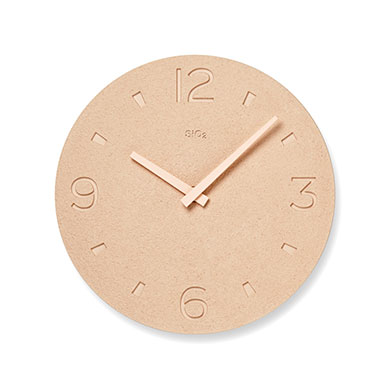
SiO2 Clock: “Kakiotoshi”
As I became more captivated by diatomaceous earth, I felt inspired to create works that would harness its distinctive qualities. As a clock designer for Takata Lemnos, I began to imagine that diatomaceous earth—a soil formed organically over millennia—could be transformed into a material for clocks expressed within interior spaces, and in doing so, new value for this extraordinary material could be revealed. I wanted to make that vision a reality. By chance, I came across “soil,” a company based in nearby Kanazawa. This company uses traditional plastering techniques to develop diatomaceous earth products. Through this collaboration, my vision began to take shape. With soil’s sophisticated plastering techniques, the SiO2 Clock acquired a refined, gentle character. I hope this clock, made from diatomaceous earth and nurtured by the land of Noto, will inspire people to reflect on the landscape and the centuries that it has taken for this unique material to form.

Yuichi Nara
Born in Tokyo, 1977. In 1999, he graduated from the Construction Department Architecture Course at Yokohama National University. Moved to Italy in 2000. Began designing following a period working at a glass studio and an architect’s office in Venice. In 2006, graduated from Venezia Construction University. During a trip to Noto, Japan, he was so impressed with the richness of the nature and lifestyle, he decided to return to Japan and moved to Notojima. In 2007, he established the Noto design office. Studying local materials and learning local techniques and applying them to his work, he attempts to design products that enrich everyday life. Alongside his design activities, he also grows rice in a rented untilled paddy field.
http://www.notodesign.jp/